
Scoop Overview
What Is Scoop
Understand what needs attention at every location, and what to do about it
Your best operators know which question to ask next. They can look at a location's results, recognize a pattern, and work out what deserves a closer look. Scoop captures that approach and applies it across your business, every reporting cycle.
Scoop Analytics provides AI performance management for businesses with many locations. It reviews every location in scope, investigates the changes that matter, and gives each manager a briefing on the part of the business they run. The briefing explains what is happening and what the evidence says is driving it, with recommended actions drawn from your operating playbook.
See what a manager receives
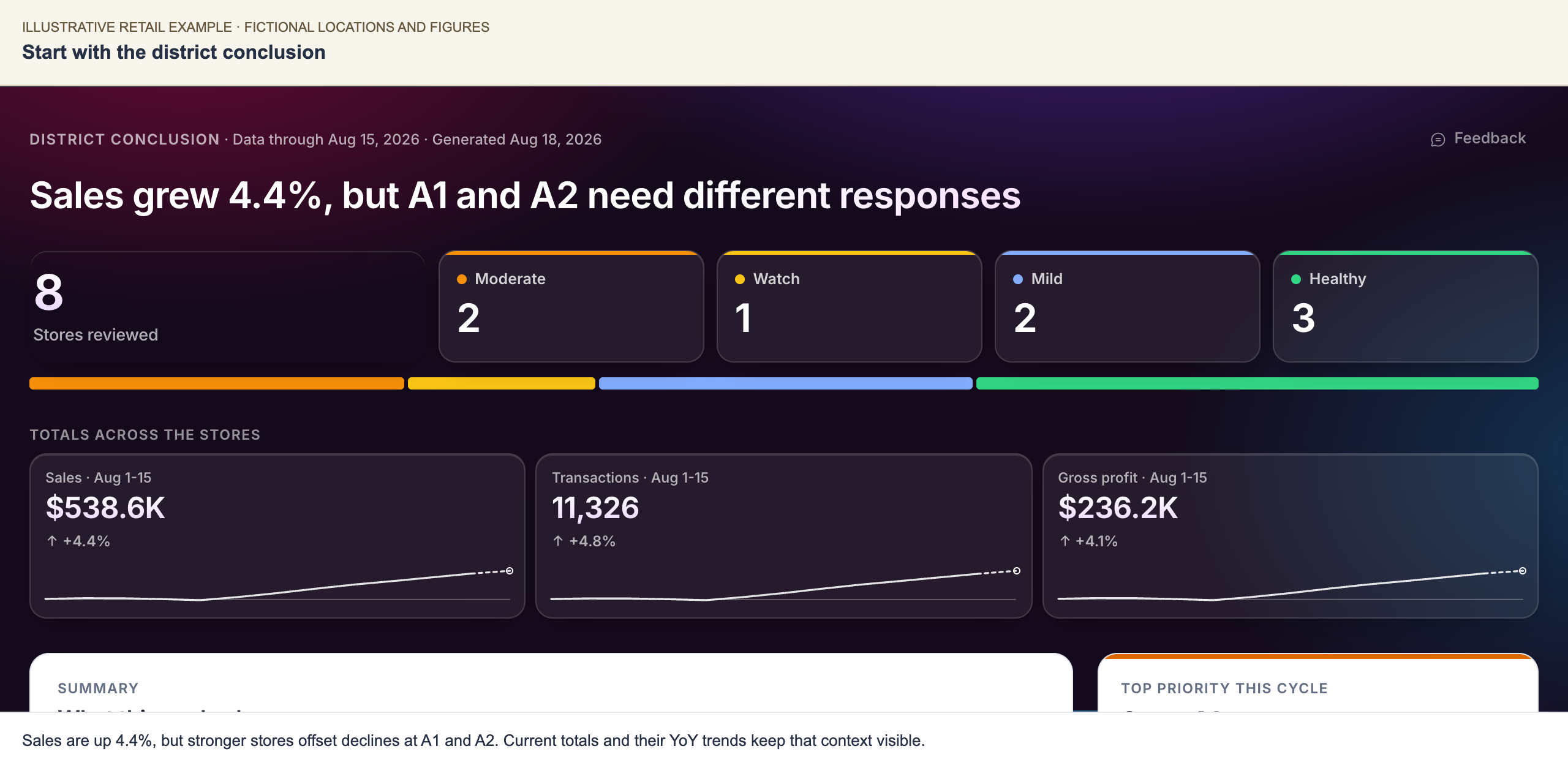
Illustrative retail example using the current portal. District sales grew 4.4%, while two stores with similar declines need different responses. All figures and locations are fictional.
Explore the complete briefing to see the district comparison, location evidence, and recommended action. Follow the investigation to see how the questions change as the evidence becomes more specific.
A different investigation for a different situation
Two locations can show the same headline result for different reasons. Falling sales might reflect fewer transactions at one location and a shift in product mix at another. A location with steady total sales may still have a weakening category. Each situation calls for different questions.
Scoop follows the evidence at each location. It compares performance with the location's history, your targets, and comparable locations, where those comparisons are available. It works through the diagnostic questions your experienced operators would ask. If the data leaves a question open, the briefing tells the manager what to check.
This is what we mean by Domain Intelligence: analysis guided by how your business works and how your operators make decisions. Your playbook captures the meaning of the measures, the questions that test an explanation, the exceptions that matter, and the actions available to each manager.
Read Your Operating Playbook to see what goes into it, or follow a concrete example in Inside a Scoop Investigation.
Useful at every level of management
| The manager's question | What Scoop provides |
|---|---|
| Where should I focus my attention? | A view of the locations in scope, their severity ratings, and the priorities for this cycle |
| What is behind this location's result? | An investigation of its performance, with the supporting figures and comparisons |
| What should I do during the next visit? | Specific questions to check with the team and recommended actions |
| Is this a local issue or a wider pattern? | District and regional summaries that connect findings across locations |
| What is working that we should understand better? | Strong results and useful comparisons to discuss with the team, alongside the issues needing attention |
The same operating standards apply across the business. The findings and recommendations reflect each location and each manager's responsibilities. A district manager can use the briefing to prepare a specific visit; a regional leader can see whether the same issue is appearing across districts.
Work through the findings in the Scoop portal
The portal brings the management summary and individual location briefings together. A district manager can compare locations, open a location's briefing, examine the evidence, and respond to a recommended action from the same place.
The latest portal updates add a comparative scorecard, charts that state the finding they explain, and trend lines beside key figures. The Scoop Portal guide explains how to use them. Available features depend on your rollout and the data in each briefing.
PDF briefings are also available for reading, sharing with the agreed recipients, and preparing for management reviews.
How Scoop fits alongside BI and AI analytics
BI platforms and AI analytics tools help teams explore and explain data. Scoop takes responsibility for a recurring service: capture the operating playbook, investigate the agreed scope, review the briefings, and deliver useful findings to each management level. Your managers decide how to act.
Scoop and Business Intelligence compares that working arrangement with tools operated by your own team, using the same business question.
Scoop runs the service
Our team works with your operators to establish your playbook, runs each reporting cycle, reviews the briefings, and delivers them on the agreed schedule. Your managers spend their time reviewing the findings and deciding what to do.
Scoop uses the data and reporting you already have. Your BI team continues to own its data definitions and dashboards. Scoop adds recurring investigation and practical guidance for the people responsible for performance.
Scoop is built for businesses with a common operating model across many sites, including stores, restaurants, hotels, clinics, and branches.
Start with the portal guide to see how a manager uses Scoop, or Getting Started to see how we put your operating playbook to work. Book a discovery call to discuss your business.
Looking for documentation for the original Scoop self-service analytics product? See the legacy documentation.