

Airtable
Analyze project tracking, inventory, and custom workflows from Airtable

Connect Airtable to Scoop to analyze your custom databases, project trackers, inventory systems, and workflows. Capture Airtable data for snapshot analysis, blend with other sources, run sophisticated calculations, and even write results back to Airtable.
What You Can Analyze
| Use Case | Analysis Types |
|---|---|
| Project Tracking | Task completion rates, timeline adherence, team workload |
| CRM/Pipeline | Deal progression, conversion rates, sales velocity |
| Inventory | Stock levels, turnover, reorder patterns |
| Content Calendar | Publishing velocity, content performance |
| Event Management | Registration tracking, attendance patterns |
| Custom Workflows | Any process you've built in Airtable |
Why Connect Airtable to Scoop
| Capability | Benefit |
|---|---|
| Snapshot Analysis | Track how records change over time |
| Cross-base Blending | Combine data from multiple Airtable bases |
| External Blending | Join Airtable with CRM, finance, or other systems |
| Advanced Calculations | Spreadsheet formulas beyond Airtable's capabilities |
| Writeback | Push calculated values back to Airtable |
| Process Analysis | Visualize workflow stages and conversion rates |
Connecting to Airtable
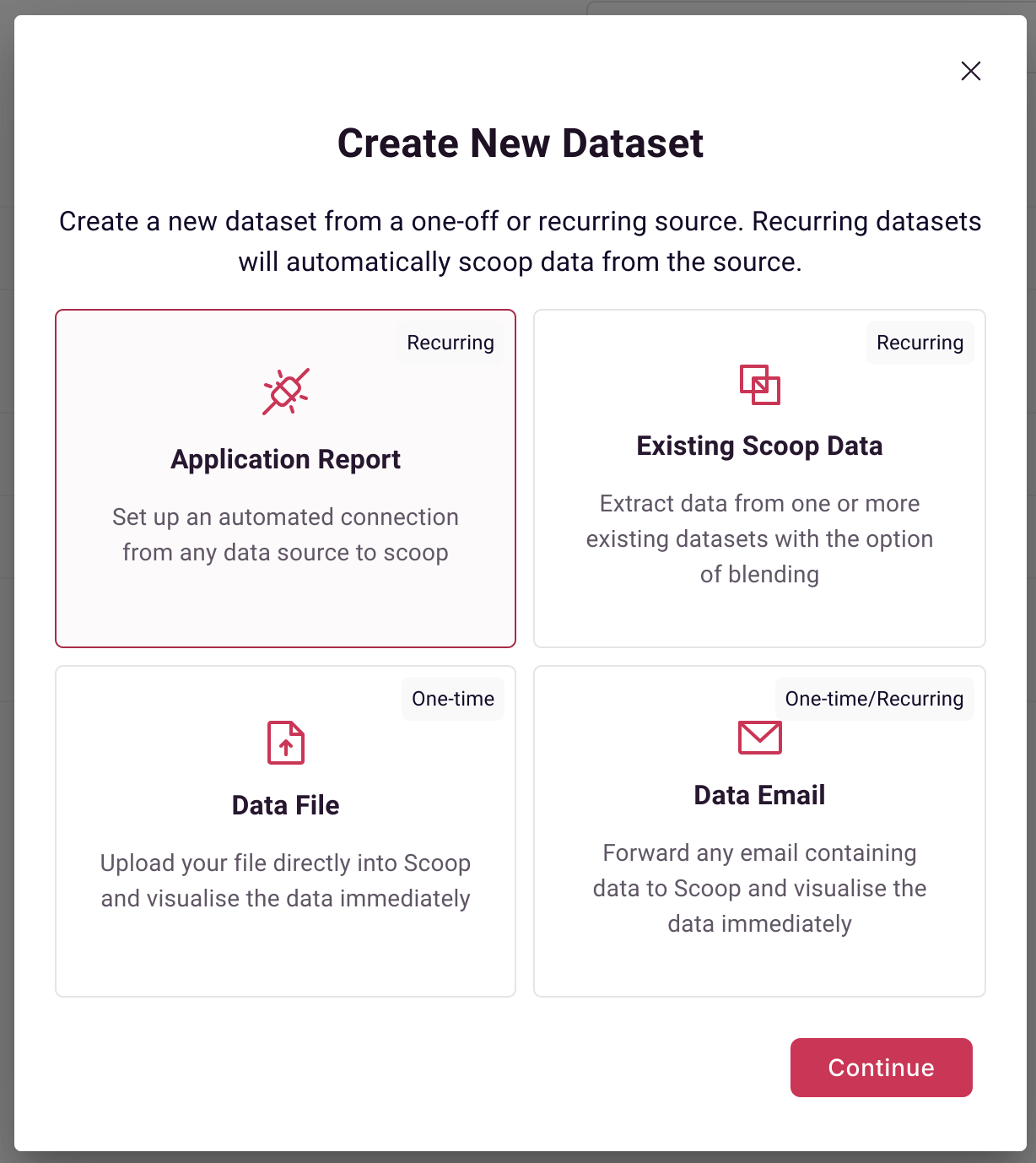
Step 1: Start Dataset Creation
On the datasets page, select Applications as a source:
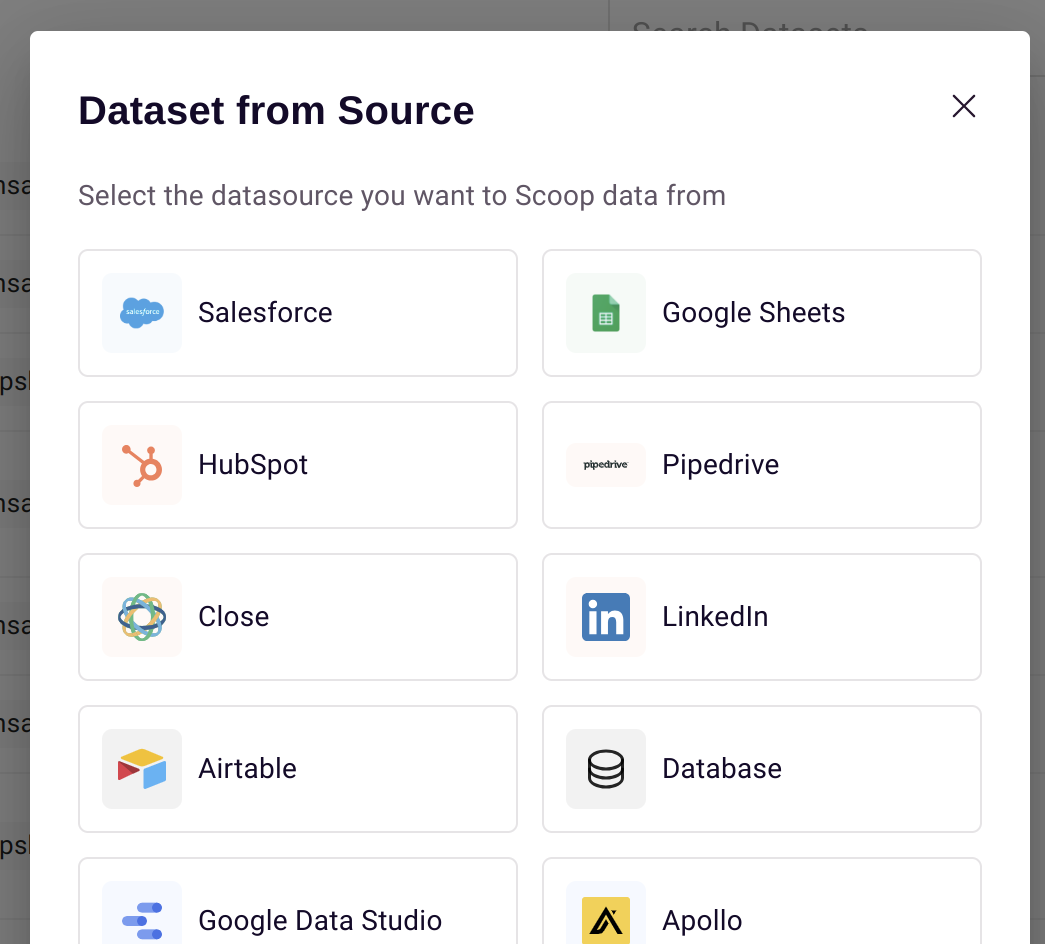
Step 2: Select Airtable
Choose Airtable from the application list:
Step 3: Choose Dataset Type
Select whether your data should be snapshotted or treated as transactional:
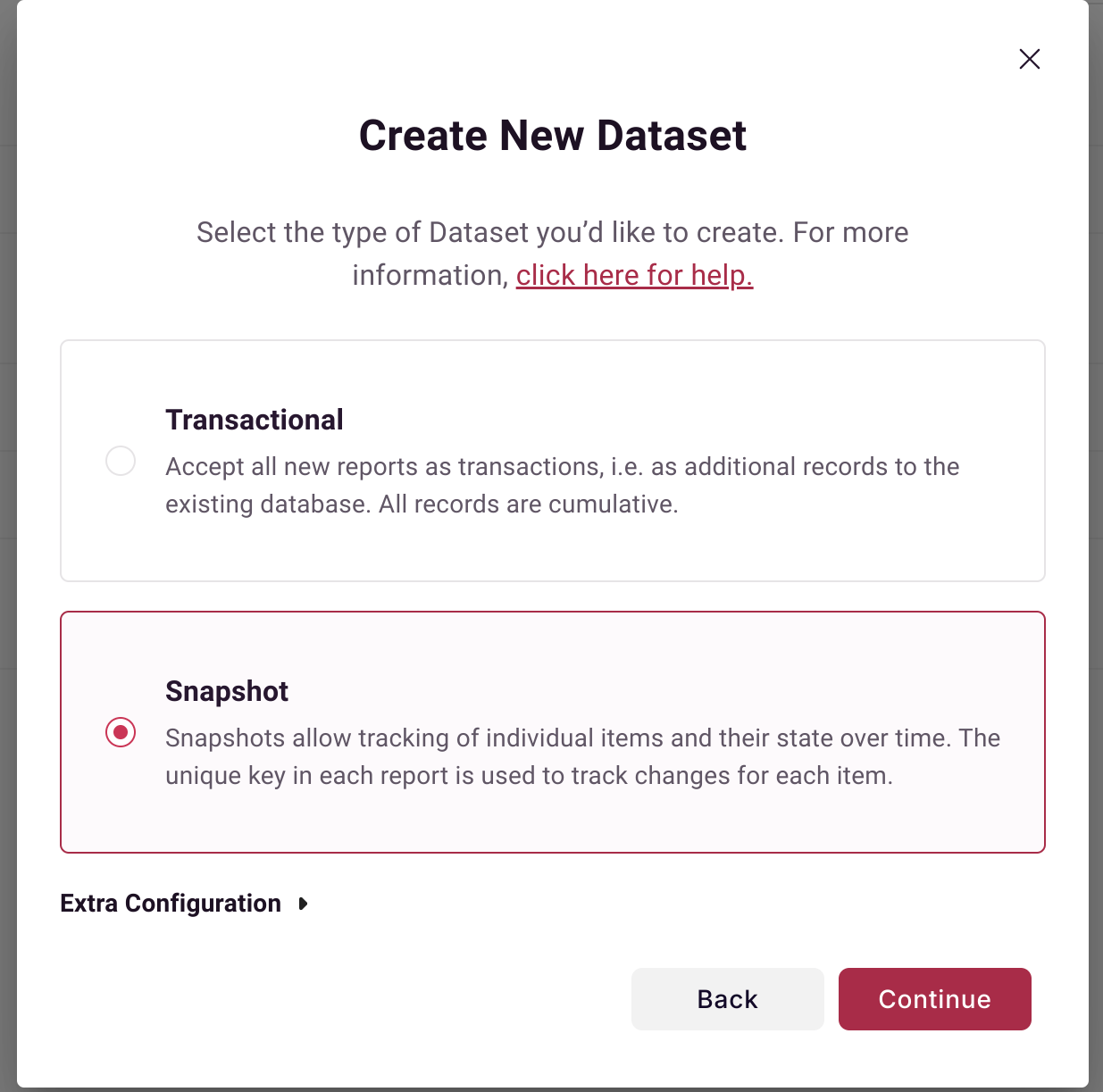
| Type | Use When | Example |
|---|---|---|
| Snapshot | Records change over time | Projects, deals, inventory |
| Transactional | Records are events that don't change | Activity logs, form submissions |
Step 4: Authorize Access
Click the link to open Airtable authorization. Select the bases you want Scoop to access:
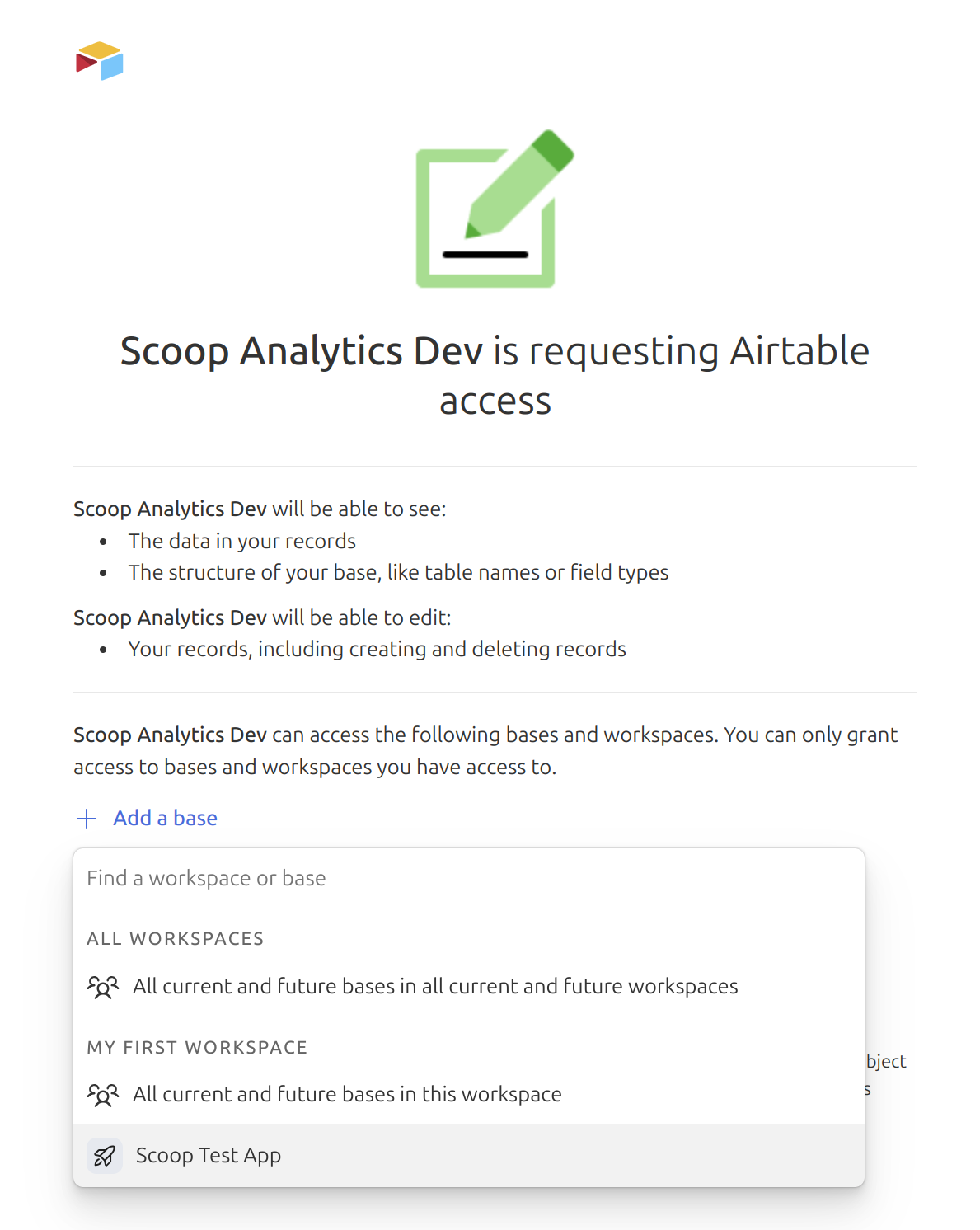
Click Grant Access to authorize Scoop.
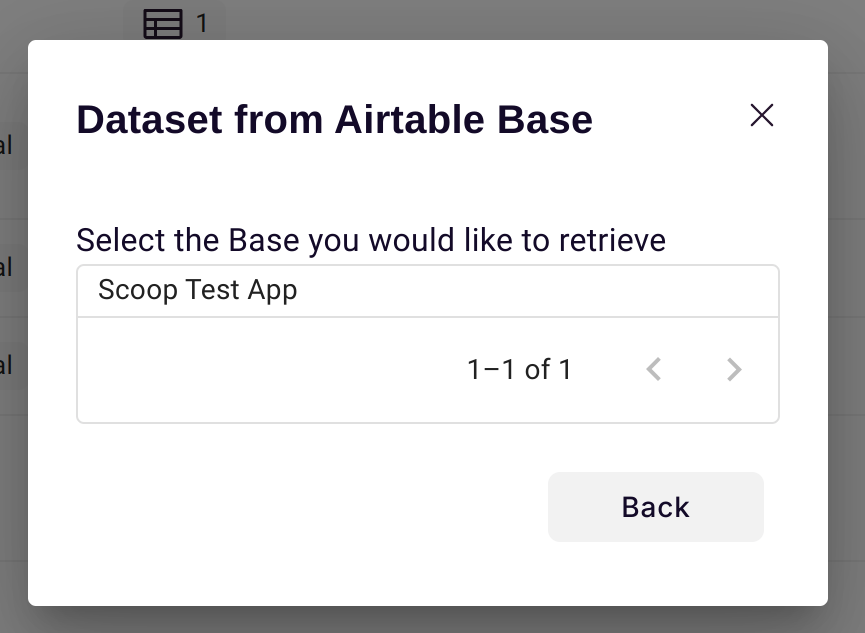
Step 5: Select Base
Return to Scoop and select the base for this dataset:
Step 6: Select Table and Fields
Choose the table and specific fields to include:
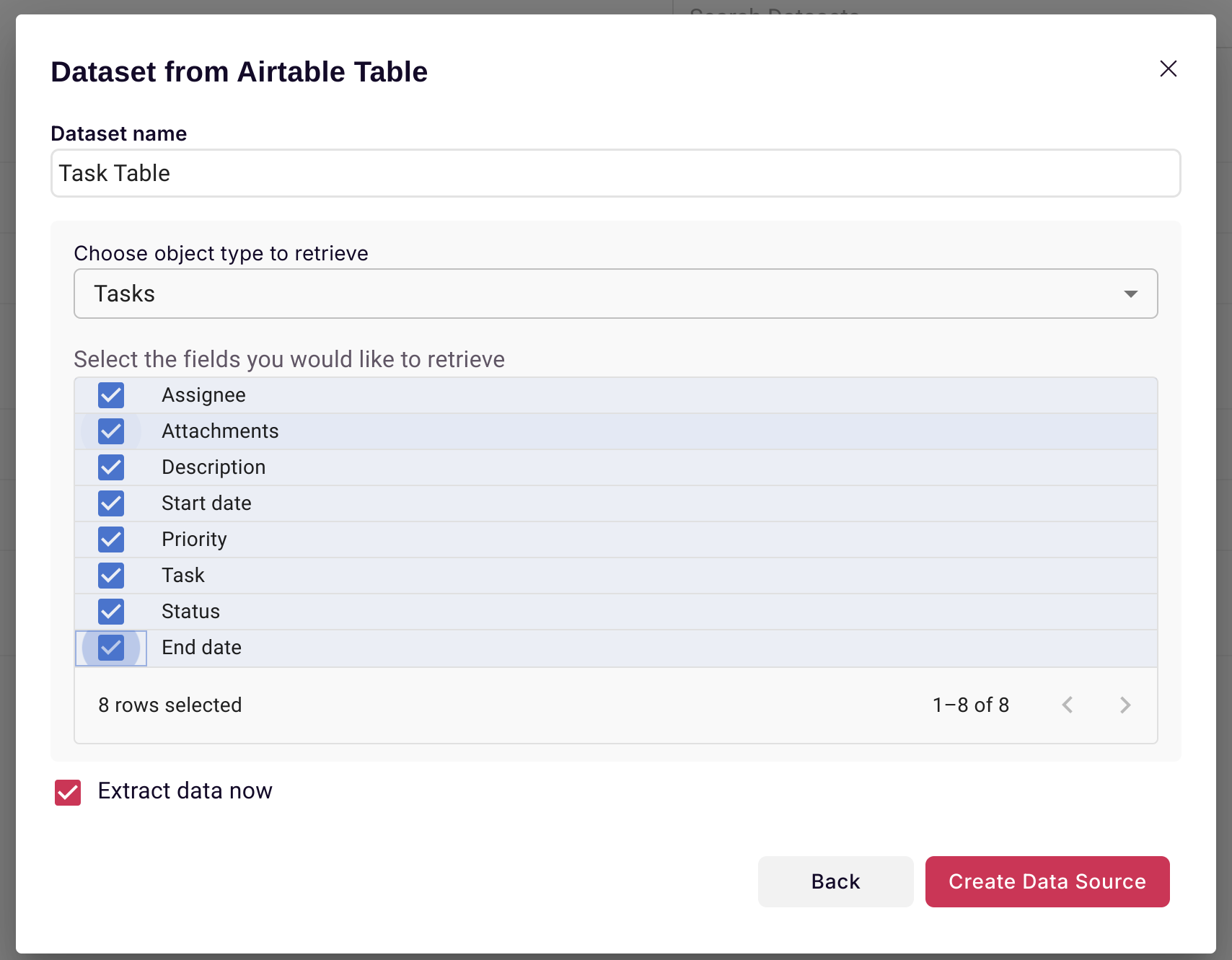
Tips for field selection:
- Include the Record ID for unique identification
- Add all status/stage fields for process analysis
- Include date fields for time-based analysis
- Select linked record fields if you need relationships
Step 7: Create Dataset
Name your dataset and click Create Data Source.
Recommended Data Patterns
For Project Tracking
| Field | Purpose |
|---|---|
| Record ID | Unique identifier |
| Status | Current stage (Not Started, In Progress, Complete) |
| Assignee | Who's responsible |
| Due Date | Timeline tracking |
| Created Date | Age analysis |
| Priority | Urgency distribution |
For Sales Pipeline
| Field | Purpose |
|---|---|
| Deal ID | Unique identifier |
| Stage | Pipeline position |
| Amount | Deal value |
| Owner | Sales rep |
| Expected Close | Forecasting |
| Company | Account linkage |
For Inventory
| Field | Purpose |
|---|---|
| Item ID | Unique identifier |
| Quantity | Stock level |
| Location | Warehouse/shelf |
| Reorder Point | Threshold |
| Last Updated | Freshness |
Snapshot Analysis
Configure as Snapshot dataset to track record changes over time.
What Snapshotting Enables
| Analysis | Description |
|---|---|
| Stage progression | How records move through statuses |
| Velocity metrics | Time spent in each stage |
| Conversion rates | % that reach each milestone |
| Aging analysis | Records stuck too long |
| Trend analysis | Volume and patterns over time |
See Snapshot Datasets for details.
Blending Airtable with Other Data
Airtable + CRM
Goal: Enrich project data with customer context
| Airtable Data | CRM Data | Combined Insight |
|---|---|---|
| Project records | Account details | Projects by customer segment |
| Deliverables | Contract value | Resource allocation vs. revenue |
| Timeline data | Renewal dates | Project impact on retention |
Airtable + Finance
Goal: Connect operational data to financial outcomes
- Project costs vs. budgets
- Resource utilization rates
- Revenue per project type
Multiple Airtable Bases
Goal: Combine data across separate bases
- Link content calendar to campaign performance
- Connect inventory to sales data
- Join HR base with project assignments
Writing Data Back to Airtable
Scoop can push calculated values back to Airtable:
- Create calculated columns in Scoop
- Configure writeback to Airtable
- Map Scoop columns to Airtable fields
- Data updates automatically on each sync
Use cases:
- Health scores calculated from multiple data sources
- Aggregated metrics from other systems
- Derived categories and classifications
See CRM Writeback for setup details.
Best Practices
Base Design
- Use consistent field naming
- Include unique identifiers
- Add created/modified timestamps
- Use single-select for status fields
Sync Frequency
| Data Type | Recommended |
|---|---|
| Active projects | Daily |
| Inventory levels | Daily |
| Historical/archive | Weekly |
Field Selection
- Include all fields needed for analysis
- Add linked record fields for relationships
- Exclude attachment fields (not supported)
Troubleshooting
Authorization Issues
- Ensure you've granted access to the specific base
- Check that your Airtable account has permission
- Try re-authorizing if connection fails
Missing Records
- Verify table view doesn't have filters
- Check field permissions
- Confirm base hasn't been moved/renamed
Data Not Updating
- Check sync schedule
- Verify Airtable API isn't rate-limited
- Confirm base is still accessible
Related Topics
- Snapshot Datasets - Track record changes
- Blending Datasets - Combine with other sources
- CRM Writeback - Push data back to Airtable
- Adding Calculated Columns - Create derived fields
Updated 11 months ago